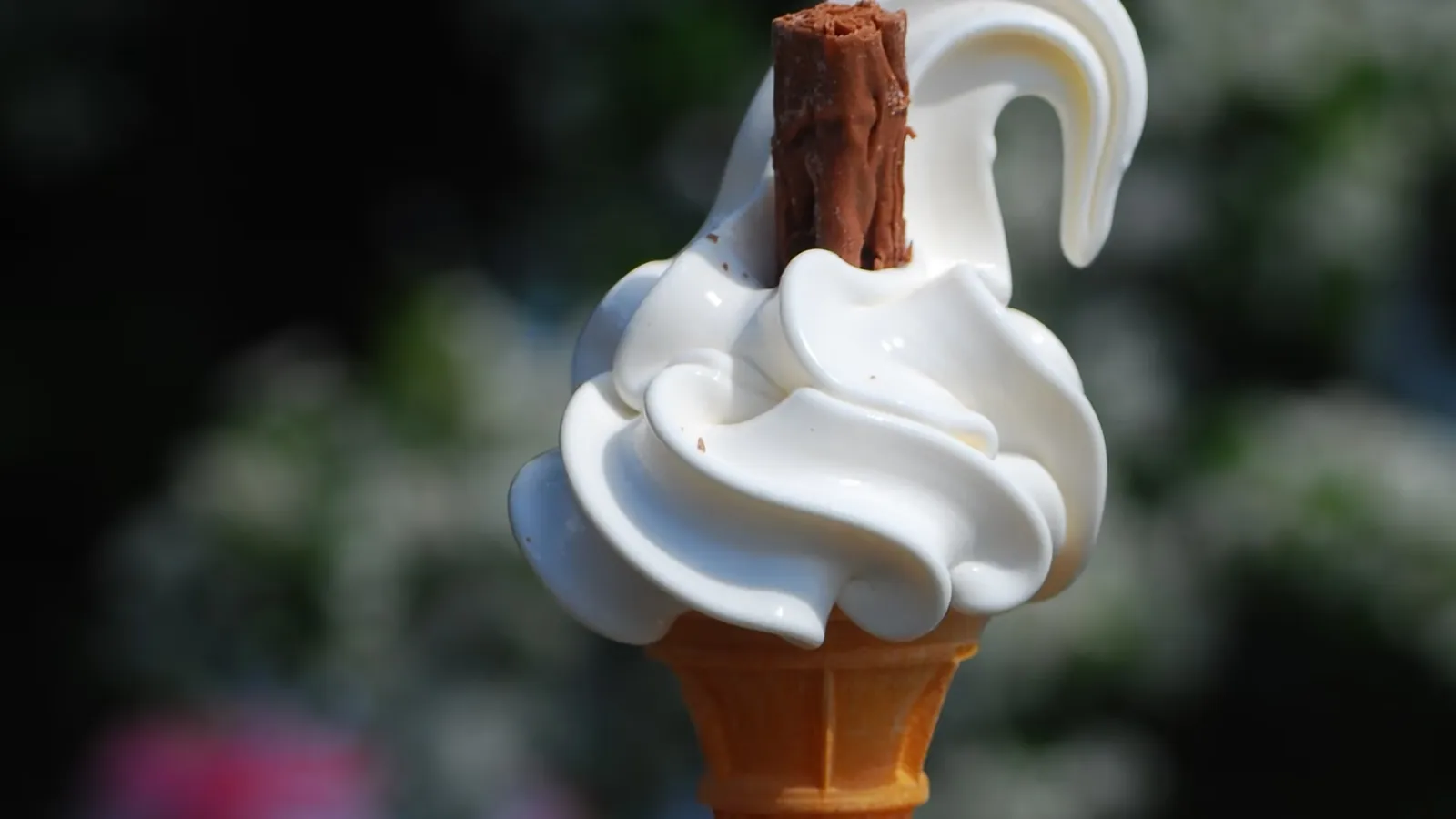
What the 99 Flake is actually named after
Ask almost any British adult why a 99 ice cream is called a 99 and you will hear some version of the same answer: it used to cost 99 pence. It feels obvious, it feels remembered, and it is almost certainly wrong.
The origin story that food historians and ice cream trade researchers consider most credible points not to a price board but to the royal court of Italy. Italian vendors who settled in the UK during the early twentieth century, many of them in Scotland and the north of England, used the number 99 as shorthand for excellence. The reasoning: the elite personal guard of the King of Italy was said to number exactly 99 men, and within Italian culture that figure became associated with the very finest of anything. When those vendors wanted to signal that their ice cream was a cut above, they reached for the number 99.
That is the version most consistently cited by food writers and ice cream trade historians, though a single definitive primary source confirming the exact moment of naming has never been publicly produced. The figures below should be treated accordingly.
The Italian ice cream makers who shaped Britain’s summer treat
The story of the 99 cannot be separated from the story of Italian immigration to Britain. From the mid-1800s onwards, families from regions including Campania and Lazio moved to UK cities, many setting up cafes and ice cream businesses. By the early 1900s, Italian-run ice cream carts were a fixture on British streets, particularly in Scotland, Wales, and the industrial north.
It is within this community, and most likely in Scotland, that the 99 is believed to have been created in the early 1920s. The precise maker has never been definitively identified. Several Scottish families have historical claims to the combination of soft whipped ice cream and a chocolate stick, but no single account has been verified by an independent archive.
What is documented is that Cadbury registered its Flake bar in 1948, and began producing a shorter version specifically sized for ice cream cones. The commercial relationship between Cadbury and ice cream vendors formalised something that informal vendors had been doing for decades before.
Why the price theory is so persistent
The price-origin theory is understandable. For many people who grew up in the late 1980s and 1990s, a 99 from the ice cream van genuinely did cost somewhere close to 99 pence. Prices at that level were common during that period, and for a child handing over a pound coin and receiving a penny change, the symmetry was memorable.
The problem is causality. The name existed long before decimalisation in 1971, let alone before UK ice cream prices reached the 99p mark. Pre-decimal price records from ice cream vans show the product sold at various prices that had no connection to the number 99.
A viral post on r/CasualUK in May 2026 captured this confusion precisely. The original poster described taking decades to discover the real origin, and recalled a specific childhood memory of the product being called a “99p Flake,” with 99p being the price. After looking at old ice cream van posters, they found the boards simply read “99,” with no pence sign.
What the Mandela Effect tells us here
The term “Mandela Effect” describes a situation where a large number of people share the same false memory. The 99 price origin is a good example of the phenomenon in a low-stakes, everyday context.
Several conditions make this particular false memory easy to form. First, the name and a plausible price coincided during a formative period for millions of British children. Second, the true origin (Italian royal guards) is obscure and unintuitive. Third, no official body has ever run a campaign to correct the misconception, so it propagates through word of mouth unchallenged.
Psychologists who study memory formation note that our brains frequently construct explanations that feel like recollections. When a price and a product name match neatly, the brain files it as a causal memory rather than a coincidence, even if the timing does not actually support that conclusion.
How much does a 99 cost in 2026?
Whatever the name originally meant, British consumers are now paying considerably more than 99 pence. Prices at seaside resorts and city parks typically range from around £2.50 to £4.00 for a standard 99 Flake, depending on location and the vendor’s costs. Specialist artisan ice cream businesses in city centres often charge more.
The gap between the name and the current price has itself become a running joke in British culture, with the number 99 feeling increasingly nostalgic in a period of sustained food price inflation.
The Office for National Statistics tracks food and non-alcoholic drink inflation as part of its Consumer Prices Index. Ice cream and related confectionery products have followed the broader upward trend seen across food categories since 2021. Specific ice cream van pricing data is not collected centrally, as most vendors operate as small independent businesses.
The Flake’s role and Cadbury’s position
The chocolate component of a 99 is not a standard full-size Flake. Cadbury produces a shorter, slightly thinner version designed specifically for insertion into a soft-serve cone. This product is sold wholesale to ice cream vendors across the UK.
Cadbury’s position within the 99 market is commercially significant. The brand is closely associated with the product in public perception, even though the ice cream itself is made by thousands of independent vendors using their own soft-serve machines and recipes. Cadbury does not make or sell the finished 99 ice cream.
The Flake bar itself was first produced in 1920, with the 99-specific version following the formal registration in 1948. The crumbly texture of the Flake, produced by a specific folding process during manufacture, is what makes it distinct from a solid chocolate stick.
Other competing origin theories
The Italian royal guard explanation is the most cited, but it is not the only theory in circulation. A selection of alternatives appears in food history writing, none of them with stronger documentary evidence:
- Some accounts suggest the name comes from a specific address, 99 Portobello Road in London, where an early ice cream business operated. This has not been verified.
- Others propose it derives from the Italian phrase for a top-quality item within a specific regional dialect. This is consistent with the royal guard theory but is not independently sourced.
- A third theory points to a Glasgow ice cream manufacturer who produced 99 units per batch of a particular product. No production records have been traced to confirm this.
Food historians tend to treat all these accounts with appropriate caution. The honest position is that the exact origin is unverified, the Italian royal guard explanation is the most historically plausible, and the price theory is the least supported by evidence.
What this says about British food folklore
The 99 story is one of dozens of British food myths that circulate as received wisdom without a solid evidentiary basis. Similar debates surround the origins of fish and chips, the Cornish pasty, and the name of the Jaffa Cake.
These myths persist partly because food carries cultural identity. A Briton who grew up buying 99s from a van on a hot day has an emotional investment in the product that makes the folk explanation feel more real than an archival one. The price theory is also democratic: it requires no knowledge of Italian history or immigration, and it matches a lived experience that millions of people share.
Understanding where these stories come from, and why they spread, is genuinely useful. It is also, as the original Reddit post noted, a rather fitting thing to think about on a scorching bank holiday.
For more on curiosities with a British angle, see the Curiosity hub.
Comments
0 comments
Loading comments…