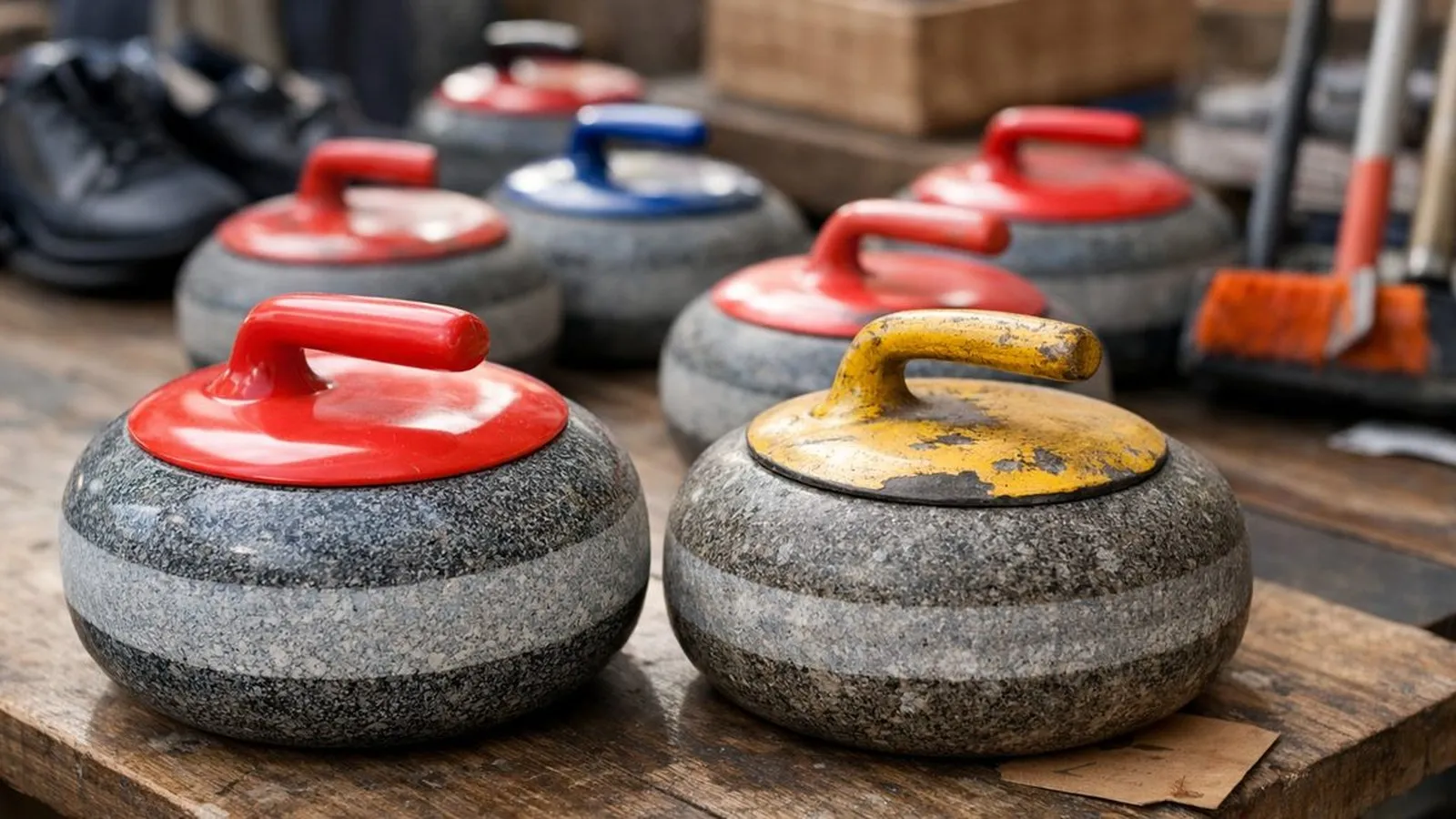
A curling stone in the UK costs between £14 for a miniature souvenir and £750 for a new competition-grade stone. Most players never buy their own; rinks provide stones as part of the ice-time fee. Prices depend on whether you need Olympic-standard equipment, a secondhand set for practice, an antique collector's piece, or a decorative item.
Competition stones: £750 each, £12,000 per sheet
Kays of Scotland manufactures every competition-grade curling stone used in the Winter Olympics and World Curling Federation events. One stone costs £750 in early 2026. A full match requires 16 stones (eight per team), so equipping one sheet of ice costs £12,000.
Kays holds exclusive harvesting rights to Ailsa Craig, an uninhabited island in the Firth of Clyde. The granite comes in two types. Ailsa Craig Common Green forms the body; its elasticity resists splintering from repeated impacts. Ailsa Craig Blue Hone forms the running surface insert; its density and low water absorption prevent erosion and ensure a predictable glide.
Each stone weighs roughly 18kg. A skilled craftsperson spends six hours producing one. The rarity of the granite, the monopoly on supply, and the hand-finishing process all drive the price.
Secondhand stones: £60 to £195
Used stones appear on Gumtree and similar marketplaces. Prices vary widely. Condition, age, and whether the seller knows what they have all matter. Expect to pay £60 at the low end for a stone with visible wear, and over £195 for a well-maintained example.
Buying through a curling club is safer. Clubs sell older sets when they upgrade. More importantly, they can assess whether a stone is still playable or has surface damage that will affect performance. Scottish Curling, the governing body, lists affiliated clubs and can direct you to local contacts.
Antique stones: £400 to £600 for pairs
Antique curling stones are collectors' items. They vary in shape and size because standardisation came later. Prices depend on age, condition, maker, and provenance.
A UK antiques dealer lists a pair of Ailsa Craig stones from around 1870 for £400. Another pair, circa 1880, is priced at £600. These are bought for display or Scottish heritage interest, not for play. Expect to pay more for stones with documented history or unusual features.
Miniatures and gifts: £14 to £135
Kays of Scotland produces miniature stones from the same Ailsa Craig granite used in competition. British Curling Supplies stocks several options:
- Hanging ornament: £14
- Small miniature: £35
- Large paperweight: £50
- Bottle stopper: £55
Kays also makes official giftware for the Milano Cortina 2026 Winter Olympics. A gift set with a miniature stone, coasters, and drink cubes costs £135. Some items are crafted from granite taken from the actual competition stones.
Floor curling sets: £300 to £360
New Age Kurling (also called FloorCurl) uses stones with bearings that glide over any smooth, flat surface. Schools and community groups use these sets where ice rinks are unavailable.
Scottish Curling offers a discounted set of eight FloorCurl stones with a carrying case for £360. Other retailers sell similar sets for £300 to £350. These are a practical option for teaching the sport indoors.
Do you actually need to buy stones?
No, unless you are a highly competitive player seeking equipment consistency or a dedicated collector. Every UK curling rink provides stones as part of the ice-time fee. Beginners should use club equipment and focus on learning technique. Scottish Curling advises that the best first step is finding a local club, which will supply coaching, stones, and brushes.
Buying your own stones makes sense only in rare circumstances. For everyone else, the rink's equipment is sufficient.
Comments
0 comments
Loading comments…