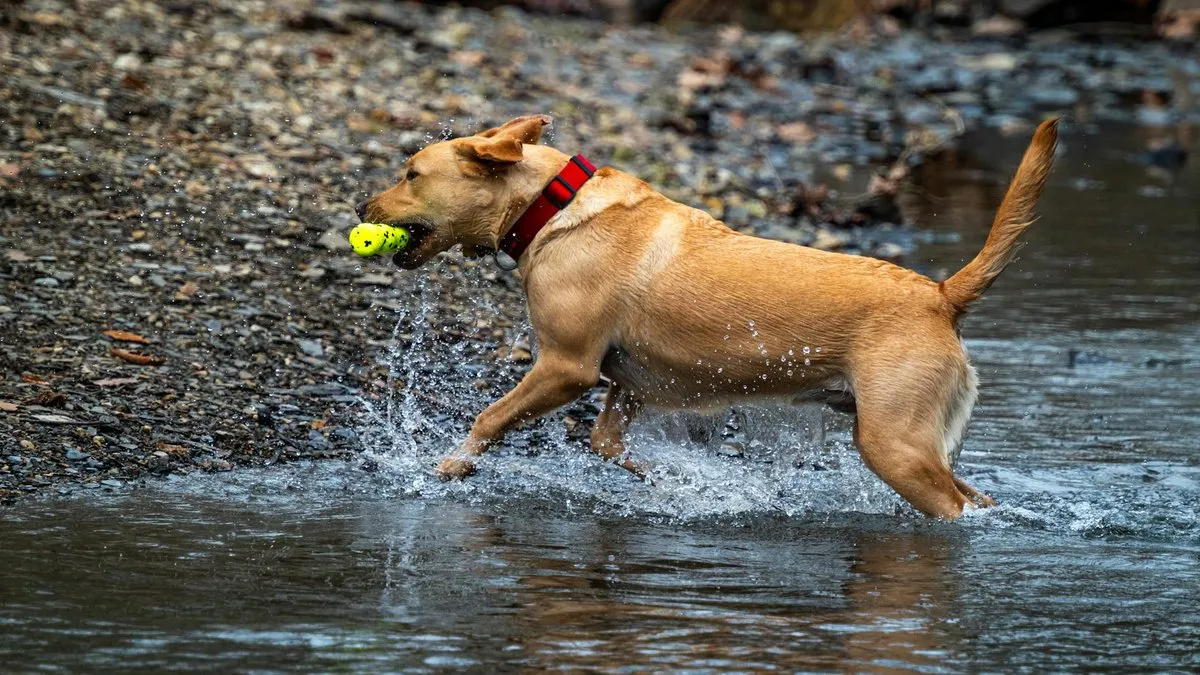
The yellow Labrador puppy in the Guide Dogs 90th anniversary campaign is named Flash. This name was chosen to honour one of the first four British guide dogs, a German Shepherd called Flash who completed training in Wallasey in 1931.
The campaign launched in 2021 to mark nine decades of the charity’s work supporting people with sight loss across the UK. The centrepiece was a three-minute animated film following Flash’s journey from puppy to working guide dog, broadcast on national television and designed to thank the charity’s 14,000 volunteers.
The voice behind the audio-described version
A special audio-described version of the advert was created for people with sight loss. This version was voiced by actress Joanna Page, best known for playing Stacey Shipman in the BBC sitcom Gavin and Stacey. Her warm narration made the campaign accessible to the very community Guide Dogs serves, allowing blind and partially sighted viewers to experience the full emotional arc of Flash’s story.
The decision to produce an audio-described version reflected the charity’s commitment to inclusion. It ensured that people with vision impairment could engage with the campaign on equal terms, hearing every detail of Flash’s transformation from playful puppy to confident working dog.
From a Wallasey garage to 36,000 partnerships
The Guide Dogs for the Blind Association was founded in 1934, three years after pioneers Muriel Crooke and Rosamund Bond trained the first four British guide dogs in a garage in Wallasey, Merseyside. Flash, the original German Shepherd, was among that pioneering quartet.
Since those modest beginnings, the organisation has become the world’s largest breeder and trainer of working dogs. To date, it has created over 36,000 guide dog partnerships. Beyond the flagship guide dog service, the charity now offers sighted guiding skills training, ‘buddy dogs’ for children with sight loss, and specialist support for young people navigating education and employment.
The charity receives no government funding. Every guide dog partnership, from birth to retirement, costs over £55,000 and is funded entirely by public donations.
How a puppy becomes a guide dog
The training journey takes roughly two years. Puppies spend their first 12 months with volunteer Puppy Raisers, who socialise them and introduce them to everyday environments: buses, shops, busy pavements. This early exposure is critical.
After their first birthday, puppies enter formal training with a Guide Dog Trainer. This phase lasts around 26 weeks and teaches the dog to navigate obstacles, stop at kerbs, judge height and width, and disobey commands that would put their handler in danger (a concept known as ‘intelligent disobedience’).
The breeds most commonly used are Labrador Retrievers, Golden Retrievers, and German Shepherds. These breeds were selected for their intelligence, temperament, and willingness to work in partnership with a human.
Once training is complete, the dog is matched with a person with sight loss. The pair then undergo a final period of training together, learning to work as a team in the handler’s home environment.
Ways to support Guide Dogs
The charity offers several routes for public support:
Sponsor a Puppy allows supporters to follow a puppy’s two-year journey for a minimum monthly donation of £8.50 (or a one-off payment of £204). Sponsors receive regular ‘Pupdates’ with photos and progress reports, plus access to exclusive social media groups.
Volunteering is the backbone of the organisation. Roles include Puppy Raisers, fundraisers, and community educators. The charity’s 14,000 volunteers make the service possible.
One-off or regular donations can be made directly through the Guide Dogs website. These contributions fund breeding programmes, training facilities, and ongoing support for guide dog owners.
Fundraising events organised by supporters, from sponsored walks to bake sales, provide vital income.
With the number of people living with sight loss in the UK expected to double to four million by 2050, the charity’s work is increasingly urgent. Every guide dog partnership represents not just mobility, but independence, confidence, and connection to the wider world.
Comments
0 comments
Loading comments…